DPDR Recovery Program
Still stuck in DPDR even though you understand it is likely anxiety or stress-related?
You have tried grounding, read the explanations, and understand this is not psychosis or brain damage. But you still feel unreal, numb, exhausted, and trapped in the same cycle.
Diagnostic
The stuck pattern
These are the patterns that keep DPDR feeling urgent, important, and hard to move past.
Trying isolated tips from Reddit and YouTube without a plan
Checking how you feel and getting pulled into analysis
Spiraling or panicking when symptoms spike
Putting normal life on hold until symptoms are gone
The Recovery Roadmap
That is the gap
The Recovery Roadmap
was built for.
A structured DPDR recovery program for people who do not need another description of what DPDR feels like — they need a step-by-step process for changing the patterns that keep it stuck.
-
Understand what keeps DPDR stuck
For when DPDR makes sense on paper, but you still feel stuck.
-
Calm the storm
For when DPDR feels dangerous and impossible to ignore.
-
Reconnect
For when DPDR has made your life smaller.
-
Stabilize setbacks
For when symptoms flare, doubts return, or one bad day makes you feel like you are back at zero.
The first win is
not instant
recovery.
It is knowing what to change first and how to respond when DPDR spikes.
WHAT CHANGES FIRST
Symptoms stop feeling random.
You understand what drives them.
Spikes feel less frightening.
You know how to steady yourself.
Thoughts feel less sticky.
You know how to untangle from them.
Normal life gets more attention.
You know how to reconnect.
Start your recovery here
What you get inside The Recovery Roadmap
A step-by-step program for changing the patterns that keep DPDR stuck:
calming fear, reducing checking and analysis, handling spikes, and rebuilding normal life.

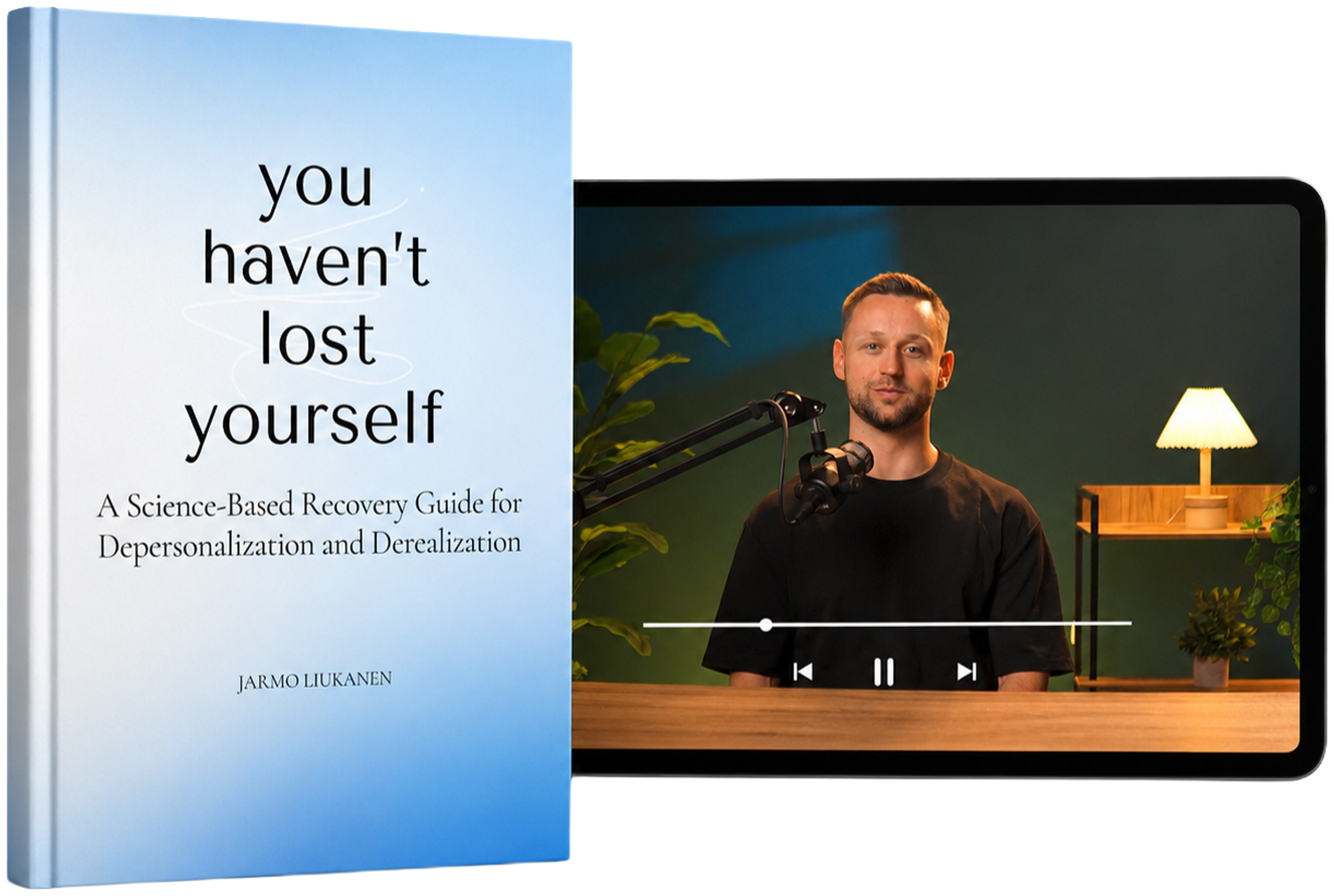
Crash Course Video
The fast-clarity overview
Understand the recovery process in less than 20 minutes,
so you know what needs to change first.

146-page Recovery Manual
The complete roadmap system
The full framework for changing the responses that keep DPDR stuck,
and rebuilding normal life while symptoms fade.
01 Understand
- DPDR Symptom Map
- DPDR Loop Model
02 Calm the storm
- Symptom Spike Plan
- Monitoring Loop Breaker
- Dissolve DPDR Thoughts Practice
- Notice the Normal You Practice
03 Reconnect
- Stress Load Diagnostic
- Life Re-Entry Plan
- Reconnection Practices
04 Stabilize
- Controlled Relaxation Tools
- Recovery Mindset
- Setback Reset Plan
Create your account, complete payment and get instant access.
Secure checkout powered by Stripe
Educational self-help only. Not medical or psychological advice, diagnosis, or treatment.
Is this program right for you?
Good fit
For you if...
You have been stuck in DPDR for months,
and scattered advice has not moved you forward.
You want to understand what is
actually driving DPDR symptoms.
You want practical tools, not another description of what DPDR feels like.
You want a serious recovery program
grounded in research models.
Poor fit
Not for you if...
You do not want to use practical tools for changing the patterns keeping DPDR stuck.
You do not want to use practical tools for changing the patterns
that keep DPDR stuck.
You are looking for a spiritual or
mystical explanation for DPDR.
You are looking for an instant cure,
instead of a recovery program.
You are in acute crisis, or need diagnosis or medication advice.
Program rationale
Why I Built This
The first shift
I first experienced DPDR a month before starting university.
That evening, something shifted. It felt like I had slipped through a hidden door in my own mind.
The familiar person I had always been suddenly felt unreachable.
What was missing
Like most people with DPDR, I began searching for answers.
Public advice explained what DPDR feels like, but not what keeps it going.
Scientific papers explained what keeps it going, but not what needs to change for it to stop.
Why this exists
This program was built to close that gap: a DPDR-specific recovery program.
It respects the complexity of the condition while turning it into something clear, practical, and usable.

Jarmo Liukanen
Creator of The Recovery Roadmap
Frequently asked questions
Who is this program for?
This program is for people with depersonalization and derealization who want more than recognition, reassurance, or symptom tips.
If you feel stuck in a state that has become confusing, consuming, and hard to reverse — and you want a clearer recovery process — this was built for you.
How do I access the program after purchase?
You get immediate digital access after purchase.
The Recovery Manual and Crash Course Video are available through the program access area, so everything is in one place.
Is this therapy or medical treatment?
No.
This is not therapy, diagnosis, or medical treatment. It is an educational recovery program designed to help you understand DPDR more clearly and approach recovery in a more structured way.
Can this help if my DPDR was triggered by panic, weed, stress, or burnout?
Yes.
Different triggers can lead into the same self-reinforcing loop. This program is built around the processes that keep DPDR active after the trigger, which is why the framework can still be relevant across different starting points.
Is this just another personal recovery story?
No.
My experience with DPDR is part of why I understand the condition, but the program is not built around my story. It is a structured framework built from DPDR-specific research, psychology, and lived understanding.
What if I already understand DPDR intellectually?
That is exactly where many people get stuck.
Understanding DPDR is not the same as changing the patterns that keep it active. This program is designed to turn explanation into practical tools you can actually use.
What do I get?
You get two core components:
The Recovery Manual — a structured recovery manual that shows you what keeps DPDR active and how to begin reversing it.
The Crash Course Video — a recovery blueprint that helps everything click in under 20 minutes.
You also get practical explanations, exercises, and tools to help you apply the framework in daily life.
What makes this different from most DPDR recovery advice?
Most DPDR advice helps people recognize the experience. Much less of it explains what keeps it going.
This program is built around the maintenance loop that often keeps DPDR chronic, so the focus is not just on symptoms or reassurance, but on what needs to change for recovery.