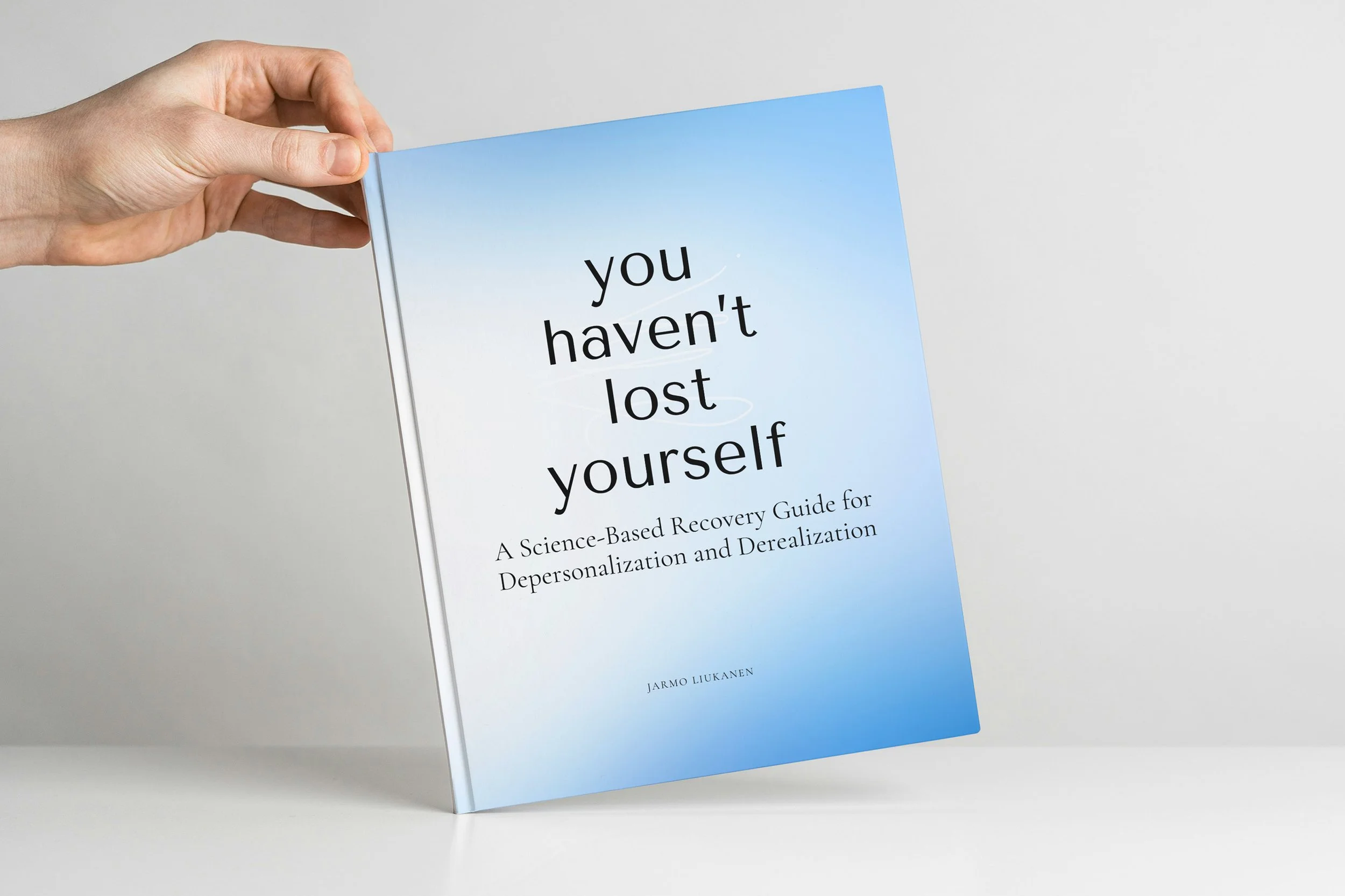
Built around what keeps DPDR chronic — and the process to begin reversing it.
Not a course. Not a book.
A structured recovery program.
You still function. You still look like yourself.
But something intimate about being you feels altered.
The world feels distant. Your thoughts feel strange. Your body feels empty.
And life starts to feel unfamiliar from the inside.
That is what makes DPDR so disturbing. It does not only change what you feel.
It changes the place from which you experience life.
DPDR can feel like something has gone
badly wrong inside you.


UNDERSTANDING depersonalization AND derealizationWhat is DPDR and why does it happen?
DPDR isn’t damage. It isn’t loss of self. It is a state shift.
Under stress, overwhelm or uncertainty the nervous system can shift into a
protective mode that prioritizes safety and vigilance over comfort and immersion.
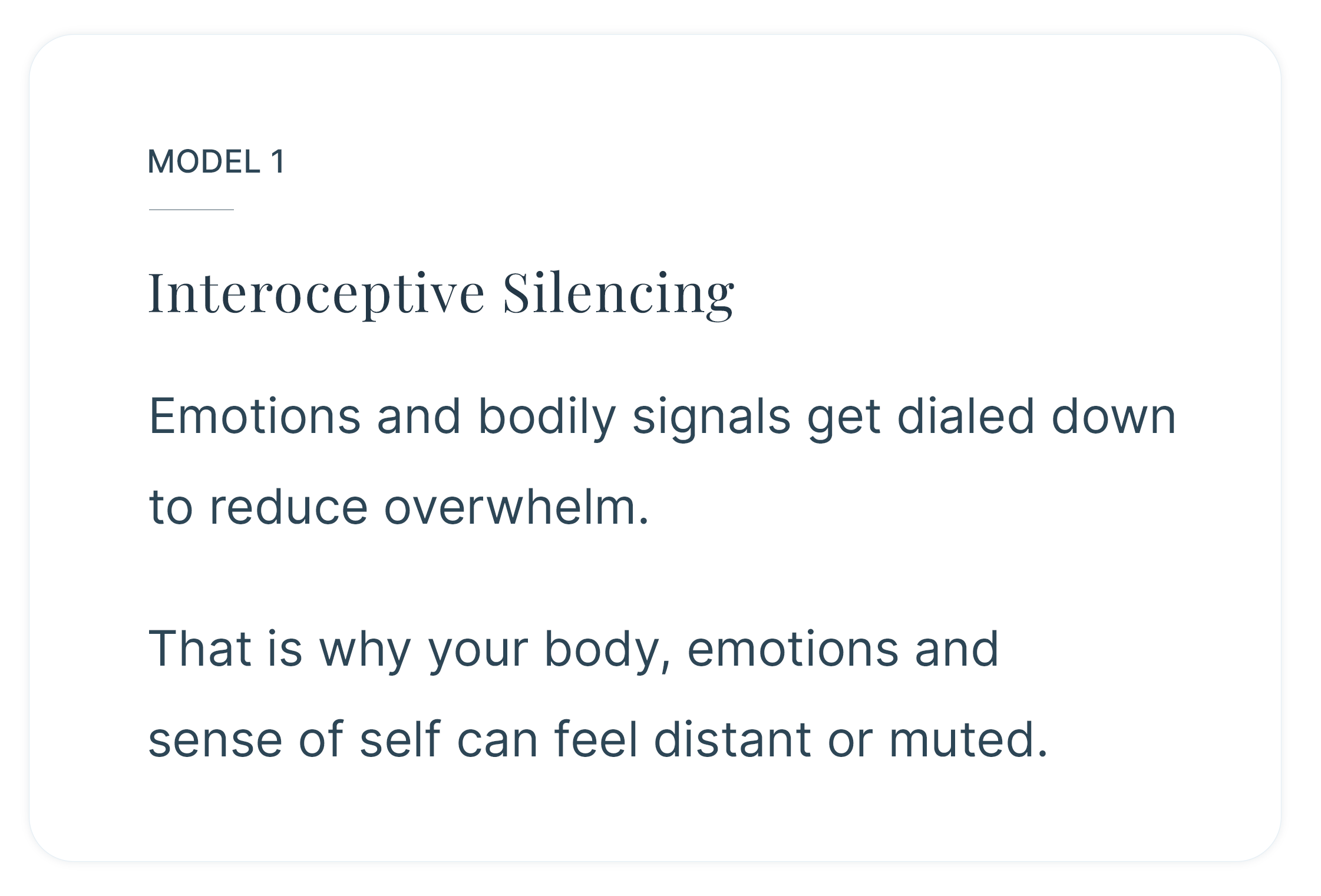
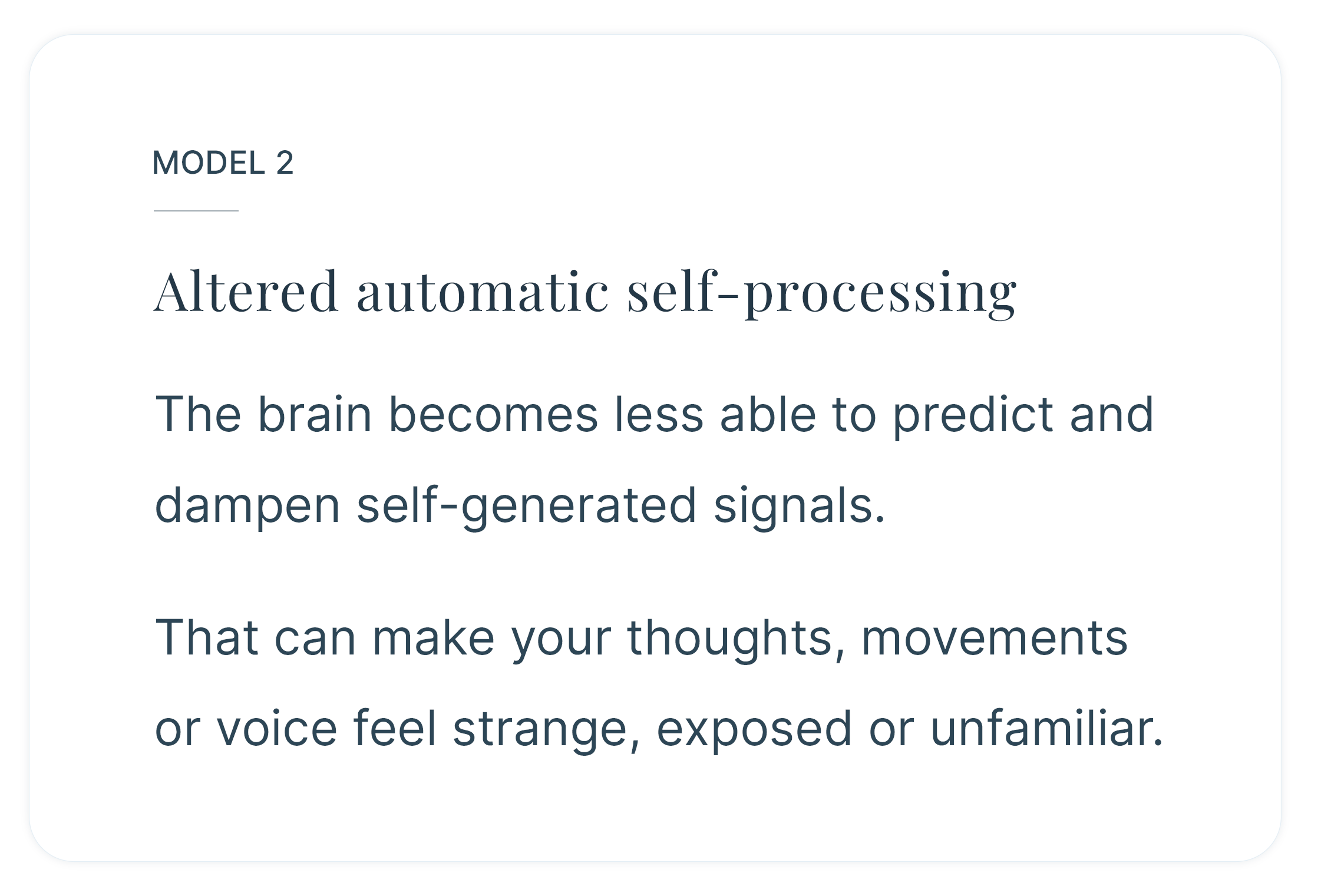
Two neuroscience models help explain the central DPDR paradox:
feeling disconnected and hyper-aware at the same time.
Why DPDR can get stuck
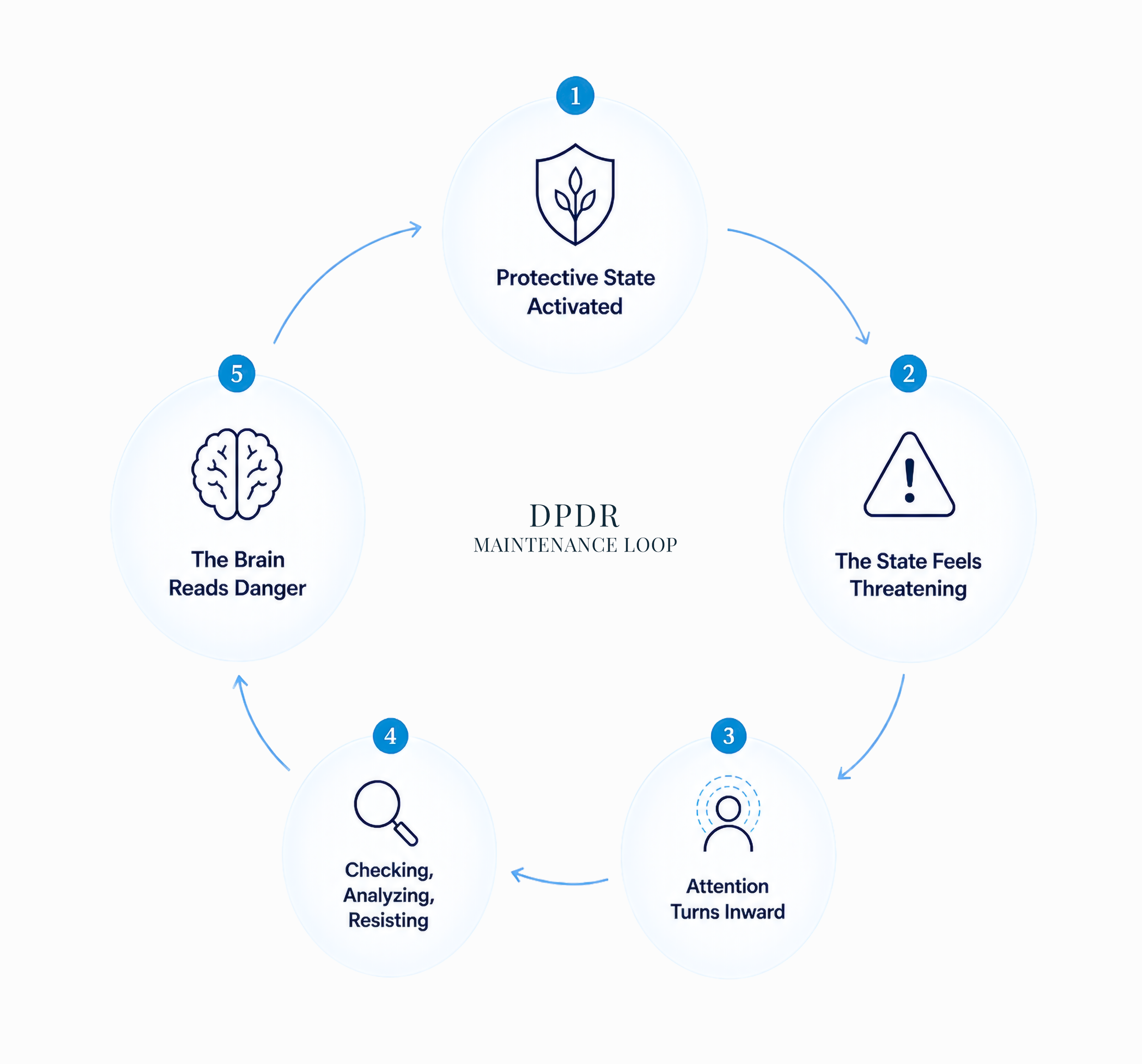
DPDR can become chronic when the protective state itself starts to feel like the problem.
That mix of numbness and hyper-awareness feels unsettling.
So the mind treats it as important or threatening.
Attention turns inward.
You feel the urge to check, analyze, and force it to stop.
But those reactions keep teaching the brain that the state is dangerous.
So the protective mode stays active.
Not because you are broken.
But because the system keeps responding as if something is wrong.
It is like an alarm went off—
and then started reacting to the sound of the alarm itself.
That is why recovery has to work differently:
not by fighting symptoms harder
but by changing the conditions that keep DPDR switched on.
Why Most DPDR Advice Fails
to Lead to Recovery
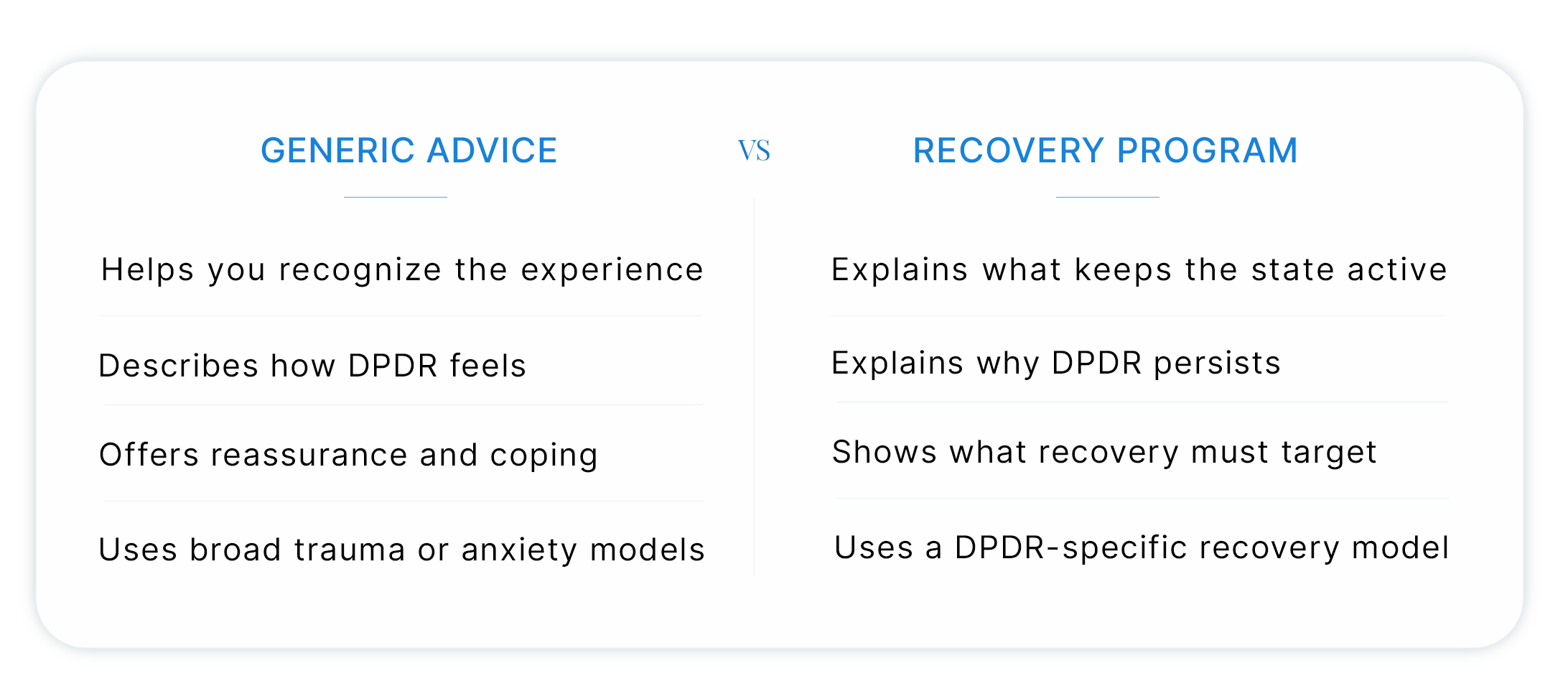
A lot of DPDR content helps you recognize the experience.
But recognition is not the same as recovery.
Most public-facing advice is filtered through broad frameworks like trauma, anxiety, spirituality, or personal anecdote.
Those frames may contain partial truths. But they are often not precise enough to explain what keeps DPDR active — or how to reverse it.
DPDR is not just stress.
It is not just anxiety.
It is not just trauma.
And it is not mystical.
It is a specific brain-body state that can become self-sustaining through threat, misinterpretation, monitoring, and withdrawal.
If that loop is not targeted directly, recovery stays vague, slow, and inconsistent.
No more guessing.
No more incomplete models.
No more hours of searching for answers.
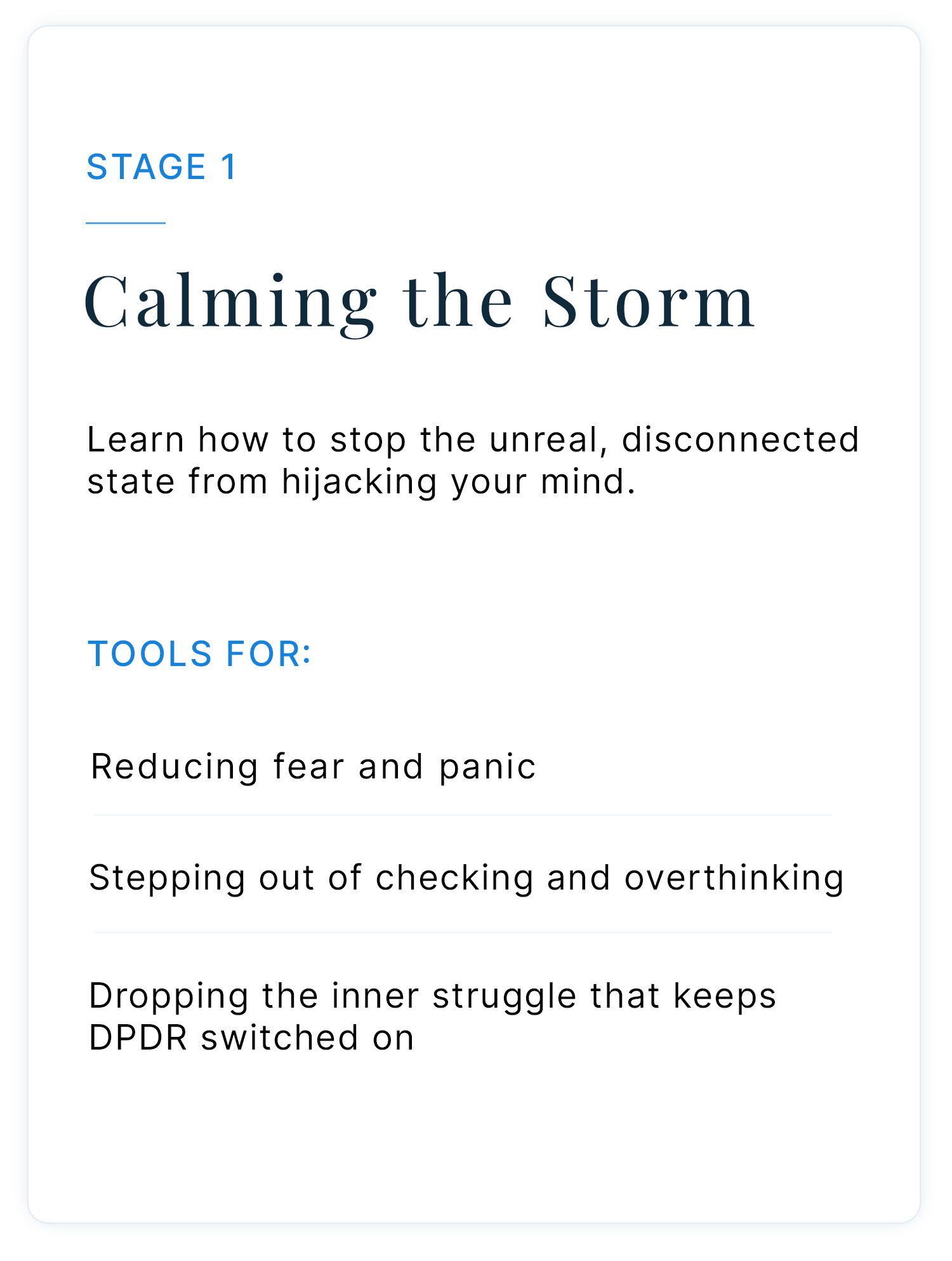
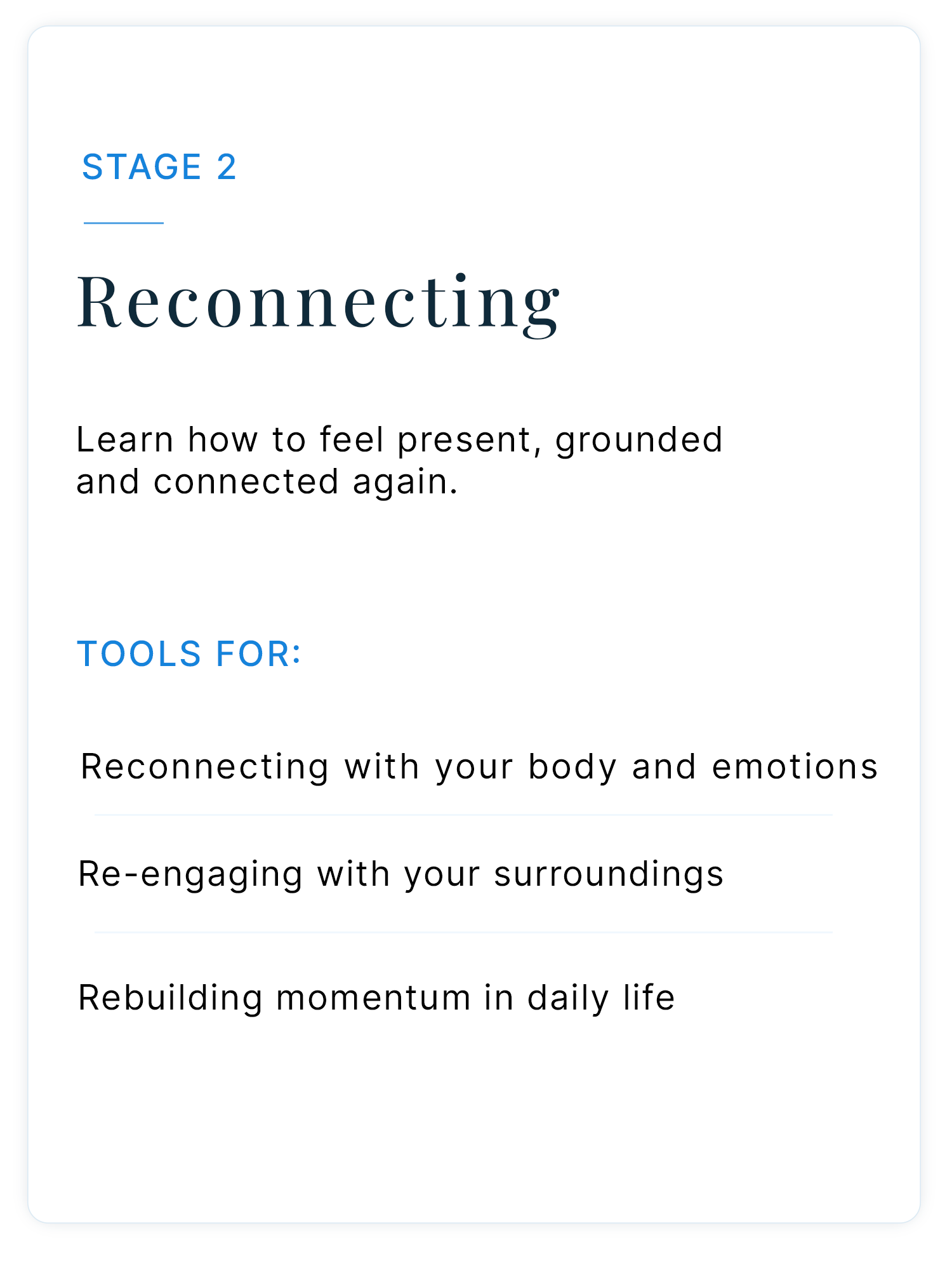
A clear two-stage recovery process for
targeting the DPDR maintenance loop.
The Recovery Roadmap
This isn’t generic coping advice.
It isn’t vague reassurance.
And it isn’t a personal story dressed up as a recovery method.
It is a serious, structured recovery program grounded in neuroscience, psychology,
and real recovery experience.
Designed to help you understand DPDR, stop reinforcing it unintentionally,
and move forward with clarity and a clear strategy.
Inside the program:
Start Your Recovery Here
Why I Built This
I first experienced DPDR a month before starting university.
That evening something shifted.
It felt like I had slipped through a hidden door in my own mind.
The familiar person I had always been suddenly felt unreachable.
I thought I was losing my mind.
Like most people with DPDR, I began searching for answers.
There was plenty to read but very little that explained why the condition persisted or
how to reverse it.
Public advice gave reassurance without a mechanism.
Scientific papers offered mechanisms without practical steps.
So I was left with either comfort or theory, but no clear path forward.
This program was built to close that gap.
A DPDR-specific recovery program that respects the complexity of the condition
while turning it into something clear, practical, and usable.

Practical answers about the program and access.
Frequently Asked Questions
-
This program is for people with depersonalization and derealization who want more than recognition, reassurance, or symptom tips.
If you feel stuck in a state that has become confusing, consuming, and hard to reverse — and you want a clearer recovery process — this was built for you.
-
Most DPDR advice helps people recognize the experience. Much less of it explains what keeps it going.
This program is built around the maintenance loop that often keeps DPDR chronic, so the focus is not just on symptoms or reassurance, but on what needs to change for recovery.
-
You get two core components:
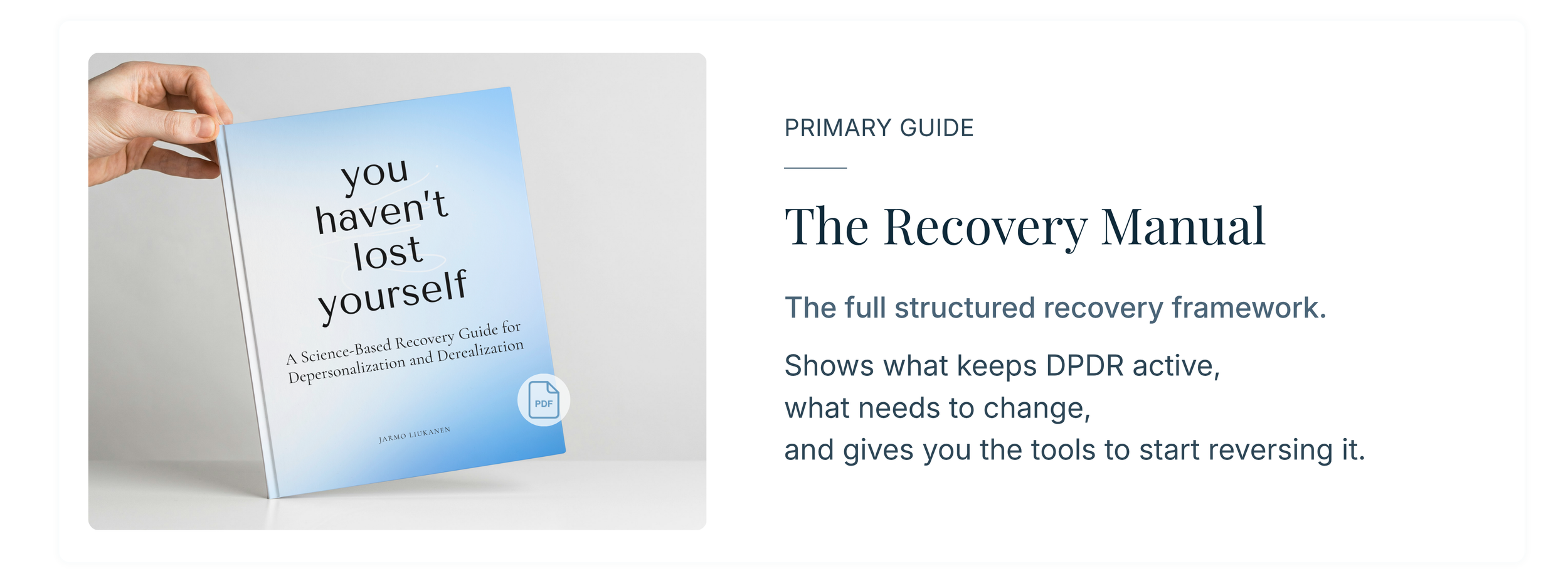
The Recovery Manual — a structured recovery manual that shows you what keeps DPDR active and how to begin reversing it.
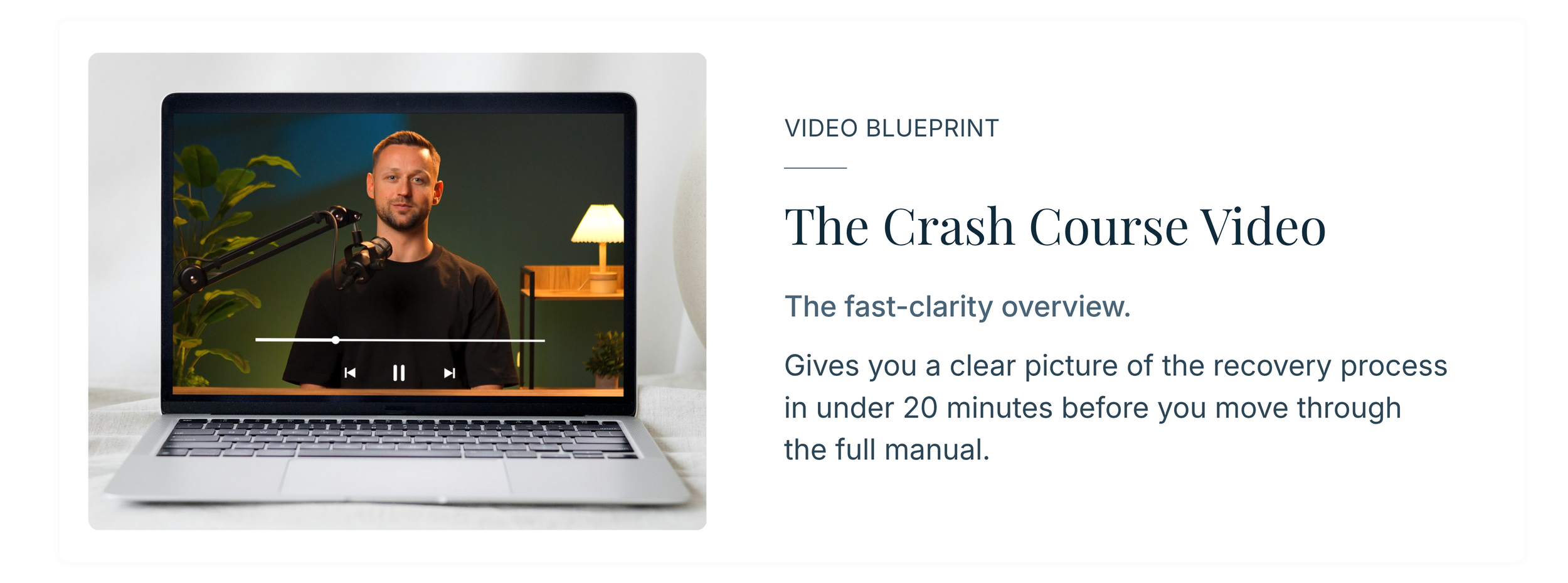
The Crash Course Video — a recovery blueprint that helps everything click in under 20 minutes.
You also get practical explanations, exercises, and tools to help you apply the framework in daily life.
-
That is exactly where many people get stuck.
Understanding DPDR is not the same as changing the patterns that keep it active. This program is designed to turn explanation into practical tools you can actually use.
-
No.
My experience with DPDR is part of why I understand the condition, but the program is not built around my story. It is a structured framework built from DPDR-specific research, psychology, and lived understanding.
-
Yes.
Different triggers can lead into the same self-reinforcing loop. This program is built around the processes that keep DPDR active after the trigger, which is why the framework can still be relevant across different starting points.
-
No.
This is not therapy, diagnosis, or medical treatment. It is an educational recovery program designed to help you understand DPDR more clearly and approach recovery in a more structured way.
-
You get immediate digital access after purchase.
The Recovery Manual and Crash Course Video are available through the program access area, so everything is in one place.